

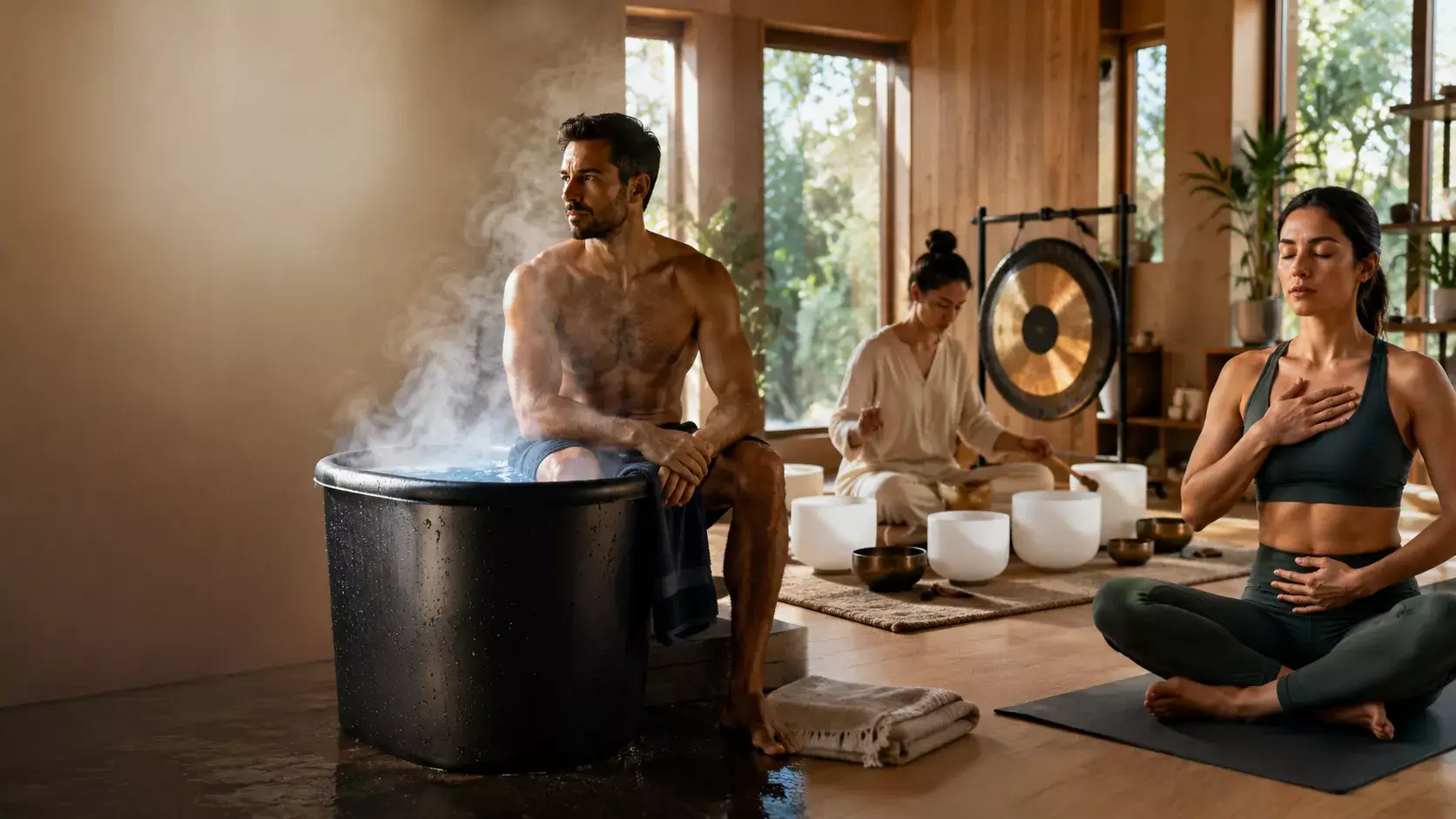
Cold plunges, sound baths, and breathwork have become major wellness trends. But do they really improve your health, or are they simply expensive rituals wrapped in good marketing? Here’s what the evidence actually suggests.
Walk into almost any wellness space today and you’re likely to hear about cold plunges, sound baths, or breathwork.
One person swears that a few minutes in an ice bath makes them feel energized for the entire day. Another says a sound bath helps them completely switch off after a stressful week. Someone else credits daily breathwork with helping them feel calmer, more focused, and more in control.
The wellness industry has embraced all three practices. Social media has made them even more popular, often presenting them as powerful shortcuts to better mental and physical health.
But there’s an important question hiding behind all the hype:
Do these practices actually work?
The honest answer is: sometimes, but probably not in the magical way social media suggests.
The research is encouraging for some uses, limited for others, and much more complicated than the dramatic claims often made online.
Cold Plunges: More Than Just an Ice-Cold Challenge?
Cold-water immersion has perhaps become the most recognizable of these wellness trends.
The idea is simple: briefly expose your body to very cold water, usually through an ice bath, cold plunge, or cold shower.
Fans describe the experience as a reset button. They report feeling more alert, energized, mentally clear, and sometimes less stressed afterward.
There is some scientific support for certain benefits.
A 2025 systematic review and meta-analysis examining cold-water immersion in healthy adults found evidence suggesting potential effects on stress, sleep quality, quality of life, and some measures of recovery. However, the researchers also emphasized that the evidence base is still limited by relatively small studies, few randomized trials, and limited diversity among participants.
That distinction matters.
A cold plunge may make you feel better without necessarily delivering all the long-term health benefits sometimes promised by influencers.
There is also a legitimate reason to be cautious.
Sudden cold exposure triggers a "cold shock" response. Breathing can become rapid, heart rate and blood pressure can rise, and the cardiovascular system suddenly has to work harder. The American Heart Association has warned that cold-water immersion can be dangerous for some people, particularly those with cardiovascular concerns.
So, no, you don't need to prove your toughness by jumping into an extremely cold tub.
For healthy adults who choose to experiment with cold exposure, a gradual and sensible approach makes more sense than chasing the coldest possible temperature.
And if you have heart or circulation problems, take medications that affect cardiovascular responses, or have another medical condition, talk with a healthcare professional before trying it.
Sound Baths: Relaxation, Not a Miracle Cure
Sound baths have a completely different appeal.
Instead of physical stress, the goal is usually deep relaxation.
During a typical session, participants lie down while a practitioner plays instruments such as singing bowls, gongs, chimes, or other resonant instruments. The atmosphere is intentionally quiet, slow, and calming.
People often describe the experience as meditative. Some leave feeling sleepy, emotionally lighter, or simply less overwhelmed.
That doesn't necessarily mean the sound itself has special healing powers.
One of the biggest problems with wellness marketing is that a relaxing experience can quickly become a claim about treating disease.
Those are two very different things.
There is reasonable evidence that relaxation and meditation-style practices can support stress management, but research specifically testing "sound baths" is much less established than the marketing around them.
In other words, enjoying a sound bath because it helps you slow down is perfectly reasonable. Claiming that particular frequencies can detox your organs, repair your cells, or cure a medical condition is a much bigger claim—and one that requires much stronger evidence.
The simplest explanation may actually be the most useful one: a quiet environment, focused attention, soothing sounds, and time away from your phone can be good for your nervous system and your mood.
You don't necessarily need a mystical explanation for relaxation to be valuable.
Breathwork: Probably the Most Practical of the Three
Of the three trends, breathwork may have the most interesting combination of accessibility and evidence.
Breathwork refers to deliberate changes in breathing patterns. Depending on the technique, this can involve slow breathing, controlled breathing, diaphragmatic breathing, or other structured patterns.
And unlike an expensive wellness retreat, you don't need special equipment.
A 2023 meta-analysis of randomized controlled trials found that breathwork was associated with reductions in subjective stress, anxiety, and depressive symptoms. The researchers did, however, caution that some studies had methodological limitations and that more rigorous research is needed.
A later systematic review similarly found that many breathing-exercise studies reported improvements in anxiety and stress, while noting that large, high-quality randomized trials remain limited.
More recent research has continued to explore the potential benefits. A 2026 randomized controlled trial involving paramedicine students found that a structured breathwork intervention was associated with lower reported stress, anxiety, and depression and greater resilience, although some outcomes, including insomnia and overall psychological wellbeing, did not significantly change.
That gives us a more realistic picture.
Breathwork isn't necessarily a cure for anxiety or depression. But controlled breathing may be a useful tool for helping some people regulate stress and shift their attention.
And because it can be practiced almost anywhere, it may be one of the easiest wellness habits to test for yourself.
So, Which One Is Actually Worth Trying?
The answer depends on what you're looking for.
Want a short-term feeling of alertness or a post-exercise recovery tool? Cold exposure may be worth exploring, provided it's appropriate for your health and done safely.
Want a relaxing experience? A sound bath may be enjoyable. Think of it as a relaxation practice rather than a medical treatment.
Want an inexpensive tool for managing everyday stress? Breathwork is probably the easiest place to start.
The bigger lesson is that wellness doesn't have to be extreme.
You don't need to spend hundreds of dollars on a retreat, sit in an ice bath for an uncomfortable amount of time, or follow a complicated breathing protocol to improve your wellbeing.
Sometimes the most effective part of these trends is the simplest part: they force you to stop.
You stop scrolling.
You stop working.
You pay attention to your breathing.
You sit quietly.
You give your body and mind a few minutes without constant stimulation.
That alone can be valuable.
The Problem With Wellness Hype
The wellness industry often takes something that may have a modest benefit and turns it into a promise of transformation.
A cold plunge becomes a "metabolic reset."
A sound bath becomes "cellular healing."
Breathwork becomes a solution for almost every emotional problem.
This is where healthy curiosity should meet skepticism.
Science rarely says, "This one thing will completely change your life."
Instead, the evidence usually sounds much less exciting: a practice may help with a particular outcome, for certain people, under certain conditions.
That may not make a great social-media headline, but it's much closer to reality.
And there's another important point: these practices should not replace established treatments.
If you're dealing with persistent anxiety, depression, sleep problems, heart symptoms, chronic pain, or another medical issue, a wellness trend should not become a substitute for appropriate medical care.
The Bottom Line
Cold plunges, sound baths, and breathwork aren't simply "fake" wellness trends—but they're not miracle cures either.
Cold plunges: Promising for certain aspects of recovery and wellbeing, but the evidence for broad health claims is still developing, and cold exposure carries real risks for some people.
Sound baths: Potentially useful as a relaxation or meditation experience, but claims about dramatic physiological healing go well beyond the current evidence.
Breathwork: Has some of the stronger evidence of the three for reducing perceived stress and anxiety, although research quality and techniques vary.
So, are they hype or actually helpful?
A little of both.
The practices themselves may have legitimate value. The hype comes from turning modest, individual benefits into universal promises.
The smartest approach isn't to believe everything—or dismiss everything.
Try what is safe and sensible. Pay attention to how you actually feel. Look for credible evidence rather than influencer testimonials. And remember that the foundations of good health remain remarkably unglamorous: quality sleep, regular physical activity, nutritious food, meaningful relationships, stress management, and appropriate medical care.
Sometimes the best wellness trend is simply finding a sustainable way to take better care of yourself.
Important: This article is for general educational purposes and is not medical advice. Anyone with cardiovascular disease, significant medical conditions, or concerns about cold exposure should speak with a qualified healthcare professional before trying a cold plunge or other intense wellness practice.




Post a comment