

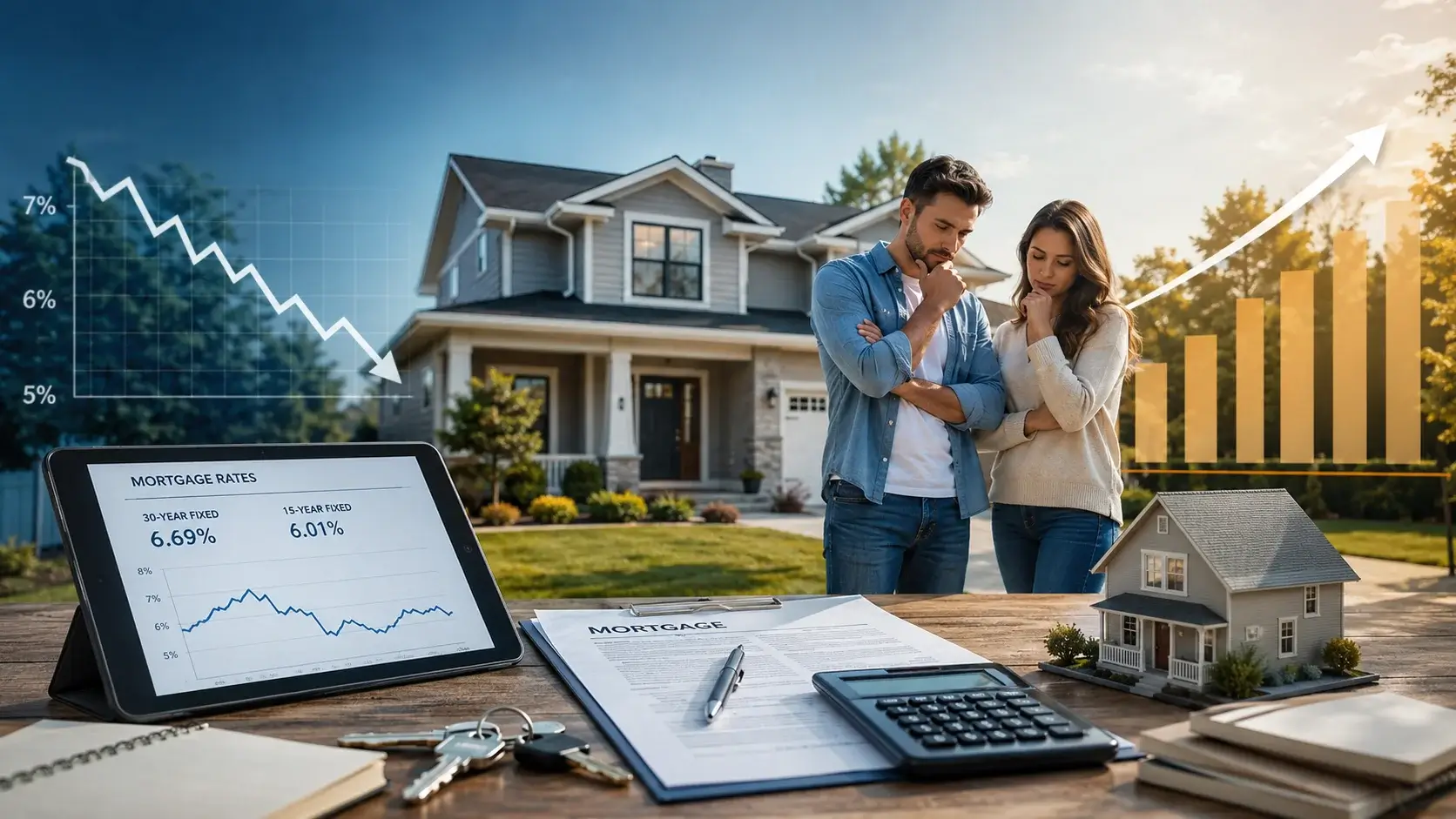
Mortgage rates are still higher than many buyers hoped, but waiting for the “perfect” rate could come with its own cost. Here’s how to decide whether buying a home in 2026 makes sense for you.
For many Americans, buying a home in 2026 comes down to one frustrating question: Should I buy now, or wait for mortgage rates to fall?
It is an understandable question. Mortgage rates are still significantly higher than the ultra-low rates many homeowners became accustomed to during the pandemic. At the same time, there is plenty of talk about rates potentially moving lower as inflation cools and economic conditions change.
As of August 6, 2026, Freddie Mac's weekly survey showed the average 30-year fixed mortgage rate at 6.69%, with the 15-year fixed rate at 6.01%.
That may sound like a reason to wait. But there is a catch: nobody knows exactly when mortgage rates will fall, how far they will fall, or what home prices will look like when they do.
And that is what makes the 2026 housing market so interesting.
The Waiting Game Can Be Expensive
Imagine you find a home you genuinely like today. You can afford the monthly payment, you have enough money for the down payment and closing costs, and the home fits your long-term plans.
You decide to wait because you believe mortgage rates will eventually drop.
That sounds logical.
But what happens if rates fall only slightly while home prices rise?
You could end up paying more for the same type of property.
This is one of the biggest mistakes prospective buyers make: focusing entirely on the mortgage rate while ignoring the purchase price.
Mortgage rates and home prices work together. A lower interest rate can make a home more affordable, but if lower rates bring more buyers back into the market, competition can increase. That can push prices higher, reduce negotiating power and make desirable homes harder to find.
Realtor.com’s July 2026 midyear forecast projected mortgage rates to average around 6.3% for 2026, while home prices were expected to rise about 1.2% nationally. The forecast also anticipated existing-home inventory increasing, potentially giving buyers somewhat more choice.
So, waiting is not automatically the better financial decision.
What If Mortgage Rates Actually Fall?
There is also a good reason some buyers may prefer to wait.
Several economists and housing analysts have expected mortgage rates to gradually decline during 2026. Earlier forecasts from Fannie Mae, for example, projected the average 30-year mortgage rate could move below 6% by the end of 2026.
If that happens, buyers who wait could potentially qualify for a larger loan with the same monthly budget.
But there is another strategy that many homeowners overlook:
You don't necessarily have to predict the lowest possible mortgage rate to buy a home.
If you buy a home that you can comfortably afford today and mortgage rates fall substantially later, refinancing may become an option.
Of course, refinancing is not guaranteed to be beneficial. Closing costs, your remaining loan balance, your credit profile and the future interest-rate environment all matter. But the possibility means today's mortgage rate does not necessarily have to remain your rate forever.
When Buying Now Could Make Sense
Buying now may make sense if several things are already working in your favor.
First, make sure the monthly payment fits comfortably within your budget. Don't stretch your finances simply because you are afraid that home prices will rise.
Second, consider how long you plan to stay in the property.
If you're buying a home you expect to live in for seven, ten or more years, short-term mortgage-rate movements may matter less than they do for someone planning to move again in two or three years.
Third, look at the local market.
National housing statistics are useful, but your city or neighborhood may behave completely differently. Some areas may have plenty of inventory and motivated sellers. Others may still have limited supply and strong demand.
Finally, don't underestimate the value of negotiating.
A buyer in 2026 may have opportunities beyond simply negotiating the home's purchase price. Depending on the market and seller, buyers may be able to negotiate closing-cost assistance, repairs or other concessions.
When Waiting Could Be Smarter
Waiting may be reasonable if buying today would put you under financial pressure.
For example, if the monthly mortgage payment would leave you with almost no room for emergencies, repairs, travel, retirement contributions or other financial goals, waiting could be the healthier decision.
You should also consider waiting if your down payment is too small, your credit profile needs improvement or your income is not stable enough for a long-term mortgage commitment.
A slightly lower mortgage rate will not fix an unaffordable purchase.
Remember this simple rule:
The best mortgage rate is not necessarily the one with the lowest percentage. The best mortgage is the one you can comfortably afford without putting your financial future at risk.
Don't Try to Predict the Perfect Bottom
One of the most dangerous parts of the housing market is trying to time it perfectly.
People often wait for rates to hit a specific number: 6%, 5.5%, 5% or even lower.
But markets rarely move exactly according to our plans.
Mortgage rates are influenced by inflation, economic growth, Treasury yields, investor expectations and other financial-market conditions. The Federal Reserve influences short-term interest rates, but mortgage rates do not simply move one-for-one with every Fed decision.
That means a buyer waiting for a specific mortgage rate could remain on the sidelines much longer than expected.
Instead of asking, “Will rates be lower next year?”, ask a more useful question:
“Can I comfortably afford this home at today's rate, and would buying it fit my long-term financial plan?”
That question is much easier to answer.
A Simple 2026 Buy-or-Wait Checklist
Before making a decision, look at these factors:
Buy now may make sense if:
- You have stable income.
- You have a solid emergency fund.
- Your down payment and closing costs are ready.
- The monthly payment fits comfortably into your budget.
- You plan to stay in the home for several years.
- You found a property that genuinely meets your needs.
- The local market gives you reasonable negotiating power.
Waiting may make sense if:
- The monthly payment would stretch your budget.
- You need more time to build your down payment.
- Your credit score needs improvement.
- Your employment or income situation is uncertain.
- You are buying mainly because you fear missing out.
- You expect to move again soon.
The Bottom Line
So, should you wait or buy now?
There is no universal answer.
Mortgage rates in 2026 remain elevated compared with the unusually cheap borrowing environment of the pandemic years, but they are also below the highs seen during some of the recent rate cycle. Current forecasts suggest that rates could ease, although the timing and size of any decline remain uncertain.
For some buyers, waiting could lead to better financing conditions. For others, waiting could mean paying a higher home price or missing an opportunity that fits their needs today.
The smartest approach is not to chase the lowest possible rate.
Instead, focus on the complete cost of homeownership: purchase price, mortgage rate, taxes, insurance, maintenance, HOA fees where applicable, closing costs and your overall financial stability.
If you can comfortably afford the home today and plan to stay for the long term, buying now can be reasonable.
If buying today would leave you financially stretched, waiting and strengthening your finances may be the better move.
Don't try to predict the perfect moment. Build a financial position that gives you the flexibility to act when the right home and the right numbers come together.
Disclaimer: This article is for educational and informational purposes only and should not be considered personalized financial, mortgage, tax or real-estate advice. Mortgage rates, home prices and lending requirements vary by borrower and location. Speak with a qualified mortgage professional before making a home-buying decision.



Post a comment