

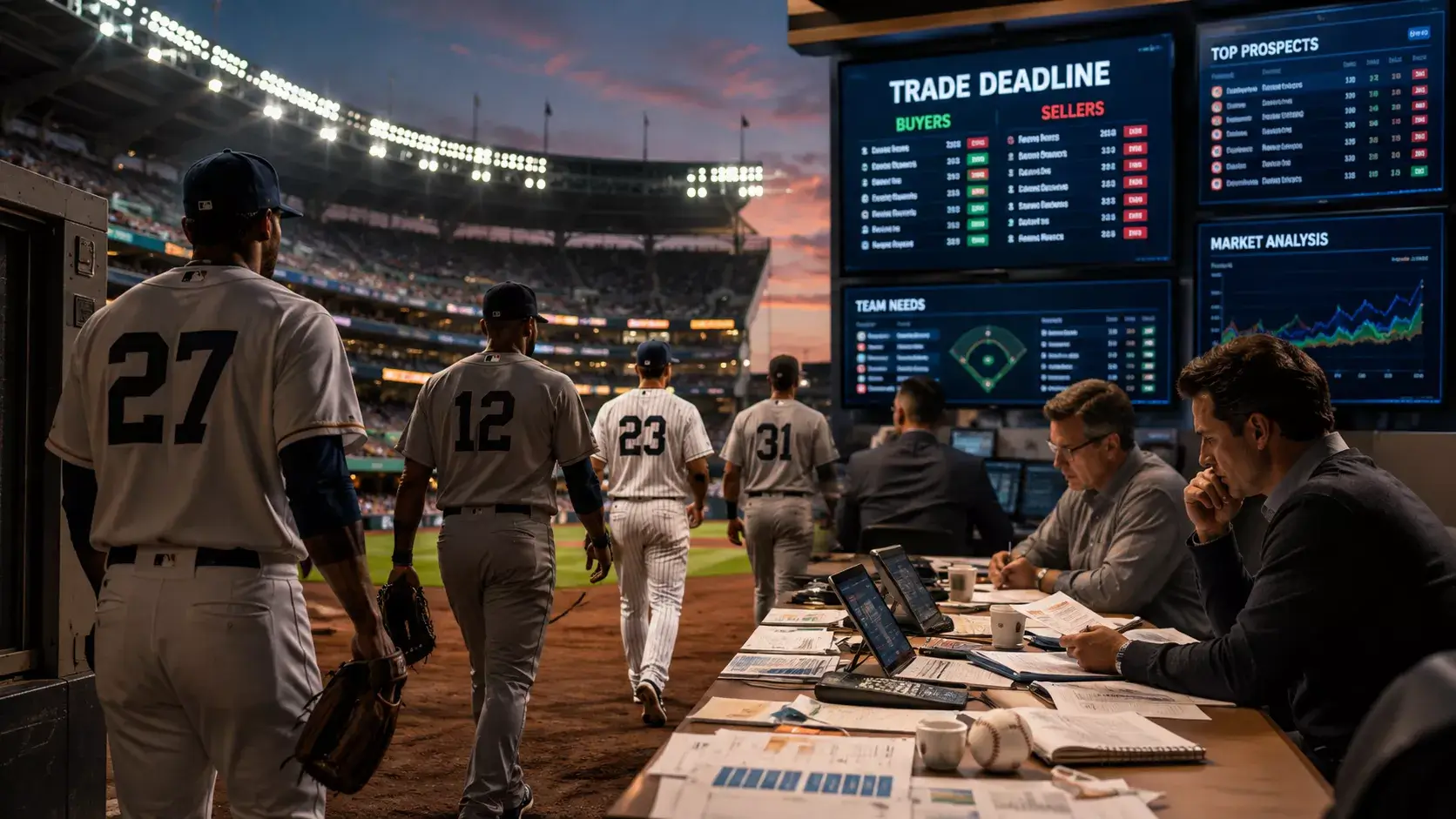
The 2026 MLB Trade Deadline delivered several blockbuster moves, from Tarik Skubal joining the Dodgers to Adley Rutschman heading to Boston. Here’s a closer look at which teams truly improved and which may regret their decisions.
MLB Trade Deadline Winners and Losers: Who Actually Got Better?
The MLB Trade Deadline is always full of noise. General managers make bold moves, prospects change organizations, contenders try to fix their biggest weaknesses, and fans immediately declare winners and losers.
But the real question is much simpler: Which teams actually got better?
The 2026 Trade Deadline gave us plenty to debate. The deadline arrived on Aug. 3 at 6 p.m. ET, and the final stretch produced some of the biggest moves of the season. The Los Angeles Dodgers landed Tarik Skubal, the Boston Red Sox made a major statement by acquiring Adley Rutschman, the Philadelphia Phillies added Luis Arraez, and the Chicago Cubs strengthened their pitching staff. Meanwhile, several teams chose to sell, reset, or make smaller moves rather than push all their chips into the middle.
Now that the dust has settled, it is time to look beyond the headlines.
Winner: Los Angeles Dodgers
It is difficult to put anyone else at No. 1.
The Dodgers already had one of baseball's deepest rosters, but adding Tarik Skubal gives them something every playoff team wants: another potential ace who can dominate a postseason series.
Skubal was one of the biggest names on the entire trade market. His availability was especially significant because he is a two-time Cy Young Award winner and was viewed as the type of pitcher capable of changing the direction of a playoff race.
The timing makes the move even more interesting.
Los Angeles did not necessarily need another superstar. That is what makes the deal so intimidating. The Dodgers were already built to contend, but injuries and uncertainty surrounding parts of their rotation created an obvious reason to add another elite arm.
Now they have another frontline option for October.
The biggest concern is obvious: the Dodgers are spending significant prospect capital and adding another major piece to a roster already packed with stars. But if the goal is winning another World Series, this is exactly the type of risk a contender can justify.
Verdict: Huge winner.
Winner: Boston Red Sox
Boston made one of the boldest moves of the deadline by acquiring catcher Adley Rutschman from Baltimore.
Rutschman has not completely returned to the level many expected when he entered the league, but he remains a highly valuable catcher with offensive and defensive upside. Boston's decision was about more than simply adding another bat. It was about strengthening an important position while signaling that the Red Sox believe they can make a serious postseason run.
The move was particularly aggressive because Rutschman was dealing with an injury at the time of the trade. Boston essentially bought into the player they believe he can be rather than focusing only on his current situation.
That is a risky strategy, but it could also be the move that changes Boston's October ceiling.
The Red Sox had already gone from looking like a potential seller to becoming one of the league's more interesting buyers after a dramatic turnaround during the summer.
If Rutschman returns healthy and looks like his old self, Boston's deadline could eventually be remembered as one of the best moves of the season.
Verdict: Winner with significant upside.
Winner: Chicago Cubs
The Cubs took a more balanced approach than some of the league's biggest spenders.
Instead of chasing one enormous superstar, Chicago focused on improving the pitching staff. The club acquired Kevin Gausman from Toronto and added other pitching pieces, including Clay Holmes and Braxton Garrett.
That strategy makes sense for a team already capable of competing.
Gausman gives Chicago another experienced starter, while the additional pitching depth gives manager Craig Counsell more options as the season moves toward October.
The Cubs did not need to completely rebuild their roster. They needed to make it harder for a playoff opponent to exploit weaknesses.
That is exactly what a good deadline should accomplish.
Verdict: Smart winner.
Winner: Philadelphia Phillies
The Phillies addressed their offense by acquiring Luis Arraez from the Giants.
Arraez is not going to transform a lineup with 40-home-run power. That is not his game. Instead, he brings elite contact ability, a high batting average and an ability to put pressure on opposing pitchers without relying on the long ball.
Arraez entered the trade hitting .324 and leading the National League in batting average. Philadelphia also acquired reliever Caleb Kilian in the deal.
For a team preparing for October baseball, that combination has plenty of appeal.
The Phillies did surrender highly regarded pitching prospect Ramon Marquez, so this was not a free upgrade. But Philadelphia is clearly focused on winning now.
The bigger question is whether Arraez's style translates into enough additional run production to justify the prospect cost.
Verdict: Winner, especially for a team built to win immediately.
Winner: San Diego Padres
The Padres entered the deadline with a major need in the rotation, and they addressed it.
San Diego acquired Robbie Ray and Casey Mize, giving the club additional starting-pitching depth for the stretch run.
That could prove extremely valuable.
The Padres have dealt with injuries and inconsistency throughout their pitching staff, so adding two experienced starters gives them more flexibility. They also avoided making the kind of desperate move that can damage a franchise's future.
The question is whether Ray and Mize can immediately provide the consistency San Diego needs.
Early returns have been mixed, which is why this is not an automatic A-plus grade. But the reasoning behind the moves was sound.
Verdict: Solid winner, but October will determine the final grade.
Loser: Baltimore Orioles
This is where the definition of "loser" becomes complicated.
Baltimore may have made logical baseball decisions, but it certainly did not make the 2026 season more exciting for its fans.
The Orioles traded Adley Rutschman to Boston and also moved other veteran pieces, including Taylor Ward. The message was clear: this was no longer about squeezing into the postseason. It was about collecting future value.
From a rebuilding perspective, the Rutschman return could eventually look very good.
From the perspective of winning in 2026, however, Baltimore clearly got worse.
That distinction matters.
A team can lose the deadline as a contender while potentially winning the deadline as a rebuilding organization. Baltimore is a perfect example.
Verdict: Loser for 2026, potential winner for the future.
Loser: Milwaukee Brewers?
The Brewers are one of the most difficult teams to grade.
Milwaukee was aggressive and added pitching throughout the trade period, including Lance McCullers Jr. and Colton Gordon earlier in the process before adding more help closer to the deadline. The Brewers also acquired Dustin May and JoJo Romero.
The problem is that Milwaukee appeared to be in position for an even bigger move.
The Brewers were linked heavily to both Tarik Skubal and Mason Miller, but neither player ended up in Milwaukee.
That does not mean the Brewers had a bad deadline.
In fact, their depth-first strategy could work very well. But when a division leader is seriously linked to a superstar and watches that superstar land with a direct World Series rival, expectations naturally change.
Milwaukee may have gotten better.
The Dodgers may simply have gotten much better.
Verdict: Mixed. Good additions, but they may have missed the biggest opportunity.
Loser: New York Yankees
The Yankees made moves, but they did not make the kind of blockbuster move many fans expected.
New York acquired Heliot Ramos from San Francisco and Luis García Jr., adding offensive help to a lineup dealing with major injuries. Ramos brings a right-handed bat and is under team control through 2029, which gives the move more long-term value than a simple rental.
Still, the Yankees had obvious needs.
Aaron Judge was unavailable, Cody Bellinger was injured, and the club was searching for more right-handed production. Catcher and bullpen depth were also areas of concern heading into the deadline.
Ramos is a useful addition, but he does not completely solve those problems.
That leaves New York in an uncomfortable position: better than before, but perhaps not enough better to change its postseason outlook dramatically.
Verdict: Disappointing rather than disastrous.
The Giants: A Different Kind of Winner
San Francisco deserves its own category.
The Giants traded Luis Arraez to Philadelphia and Heliot Ramos to New York, but they were not simply giving away useful players. They were turning present-day talent into younger assets.
The Arraez deal brought back pitching prospect Ramon Marquez, who had a 1.68 ERA across Class A levels at the time of the trade, along with reliever Marty Gair.
That is exactly what a team outside the playoff picture should consider.
The Giants may be worse immediately, but their farm system could be stronger.
Verdict: Short-term loser, long-term potential winner.
So, Who Actually Got Better?
The easiest way to judge the deadline is not by counting the biggest names acquired. It is by asking whether a team's biggest weakness was addressed.
The Dodgers added an ace.
Boston added a high-upside catcher.
Chicago added rotation depth.
Philadelphia added one of baseball's best pure contact hitters.
San Diego strengthened a vulnerable rotation.
Those moves make sense because each team addressed a specific need.
Meanwhile, teams such as Baltimore and San Francisco were playing a different game. They were thinking beyond 2026.
That is why trade deadline grades should always come with a warning: the winner on Aug. 3 is not necessarily the winner on Oct. 31.
A prospect who becomes a star can make a trade look brilliant years later. A superstar acquisition can look foolish if the team gets eliminated in the first playoff round.
For now, though, the early answer is clear.
The Dodgers made the loudest statement. The Red Sox made the boldest gamble. The Cubs made one of the smartest upgrades. The Phillies improved their lineup without completely changing their identity. And the Orioles chose the future over the present.
Now comes the fun part.
The trades are finished. The excuses are over. The new players have to perform.
And by October, we will finally know who actually won.



Post a comment